BF 112: Reading the Land
Learn the secrets of what your land is telling you to increase profitability on the farm or ranch.
Enroll in Course
Reading the Land
What if your land is trying to tell you something—but you don’t know how to read it?
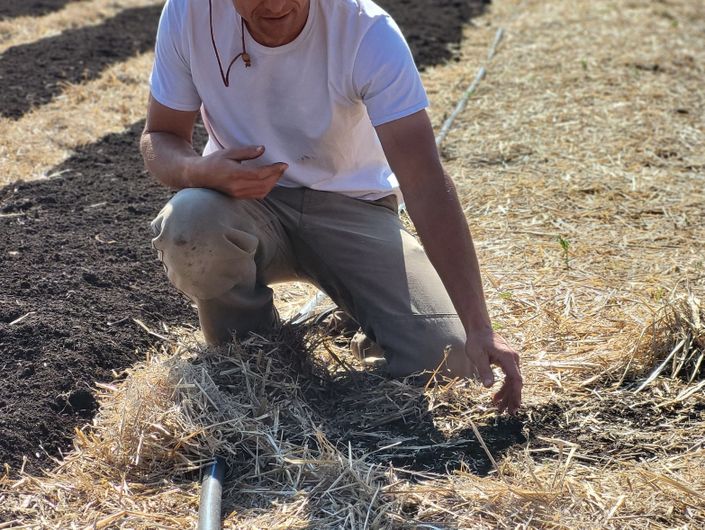
Your land is constantly communicating through its soil, plants, water, animals, and landscape. Learning to recognize and interpret those signals can help you make better management decisions, improve land health, and build more productive and resilient crop and livestock enterprises.
For more than 20 years with the USDA Natural Resources Conservation Service, I’ve had the privilege of visiting hundreds of farms and ranches. I’ve seen firsthand what works, what doesn’t, and—most importantly—why. I’ve learned valuable lessons from the landowners I’ve worked with and from managing my own hobby farm here in upstate New York.
In Reading the Land, I’ll share those lessons and give you practical tools to help you understand what your land is telling you—so you can make more informed decisions about how to manage it today and where to take it in the future.
Who Is This Course For?
All levels are welcome.
This course is designed for farmers, farm managers, and landowners who want to improve land health and animal and plant productivity through observation, data gathering, and interpretation.
It is especially valuable for anyone who:
- Wants to better understand the land they already manage
- Is considering purchasing or leasing land for an agricultural enterprise
- Wants to identify opportunities and limitations before making costly management decisions
- Is looking for practical ways to improve soil, water, plant, and livestock productivity
- Wants to become a more confident and observant land manager
What Will You Learn?
The primary goal of Reading the Land is to help you develop the skills to observe, understand, and interpret information that is readily available from a piece of land.
You’ll learn how to establish a baseline of your land’s health and use that baseline to determine whether your management decisions are moving the land toward your desired level of health and productivity.
You’ll also receive personalized feedback by submitting aerial and ground-level photographs of your own property for interpretation.
In this course, you will learn how to:
- Gather and interpret information about your property using free and readily available resources—and use that information to understand the land’s opportunities, limitations, and potential.
- Recognize how key ecosystem processes are functioning, including the water and mineral cycles, and identify ways to improve those processes and potentially reduce costly inputs.
- Monitor changes in your land over time so you can understand how it is functioning today and determine whether your management decisions are producing the results you want.
- Use observation as a management tool, learning to see the subtle signs that can help you make better decisions before problems become expensive ones.
How the Course Works
Most of the course work is completed on your own schedule through a combination of readings, photographs, videos, graphics, PowerPoints, and practical assignments in Teachable, our virtual classroom.
Weekly live webinars are an important part of the course. These sessions give you the opportunity to learn from presenters and fellow students, ask questions, and apply what you’re learning to real-world situations.
We encourage you to attend the webinars live so you can participate in the conversation, but if you can’t make a session—or want to revisit something later—every webinar is recorded and available for later viewing.
Learn to see your land differently.
The land is already telling you what it needs. Reading the Land will help you learn how to listen.
Webinar Schedule
In 2026, this course will be offered live for 4 weeks on Tuesdays from 7:00 – 8:30 PM (Eastern) from September 22 – October 13. While we encourage live attendance so you have the opportunity to engage with presenters and ask questions, all webinars are recorded and posted in the online classroom to watch anytime. Once enrolled in this course, you will retain access to all materials indefinitely and can return to participate in the live webinars in future offerings. Join us!
Your Instructor
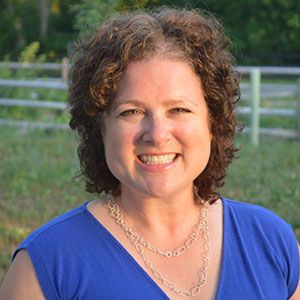
Elizabeth Marks, a certified Holistic Management (HM) educator since 2013, works with landowners to improve soil health and adapt to climate change. She retired from the USDA Natural Resources Conservation Service in 2025 after a 20 year career where she served as a Northeast soil health specialist, biologist, and grazing expert. Elizabeth received a bachelor’s degree in biology from Mount Holyoke College. She lives in in the Hudson Valley on a hobby farm in a net-zero, energy efficient home she designed herself.

Student Testimonials
" I took this course to better understand the nuance of soils
and truly learn how to
read the land to identify areas of opportunity and
possible roadblocks for growing diverse vegetable crops, and Elizabeth Marks
delivered just that! Thank you for developing such an important resource for
aspiring and beginning farmers."
“Instructors were well informed and excited to share their knowledge. Offered support and guidance and answered questions after lectures."
"I feel like I was managing my land somewhat blindly, just trying to
apply whatever "best practice" I had heard about in a book or at a
conference. This course gave me the language and skills to observe,
measure, and analyze my management and determine which practices were
having the impact I wanted."
Course Curriculum
-
StartWeek 1 Webinar Slides and Recording
-
StartForum: Introduce Yourself!
-
StartExercise: Determine Soil Texture By Feel
-
StartExercise: Create a Soils Map of Your Property or Create a Painting with Soil
-
StartExercise: What is the history of your land?
-
StartForum: What did you learn about your soils and the history of your land this week?
-
StartHomework: Email a picture of a problem on your land.
-
StartResource: Holistic Management International
-
StartWeek 2 Webinar Slides and Recording
-
StartResource: Identifying annually tilled versus perennial crops in aerial photos.
-
StartFORUM: What are you reading/watching/or listening to?
-
StartReading: Brittleness: An Introduction
-
StartReading: The Four Ecosystem Processes in Action
-
StartExercise: Ecosystem Health Analysis Worksheet
Frequently Asked Questions
Online Course Tiered Pricing
The Cornell Small Farms Program offers a tiered pricing model to provide greater access to our online courses. To determine your course enrollment cost, please consult the chart below, and honestly identify your current financial situation.

We realize that not everyone is able to afford the price of our courses, so we also offer a small number of scholarships each year to New York State residents. To apply, please read scholarship requirements and complete the application here.